
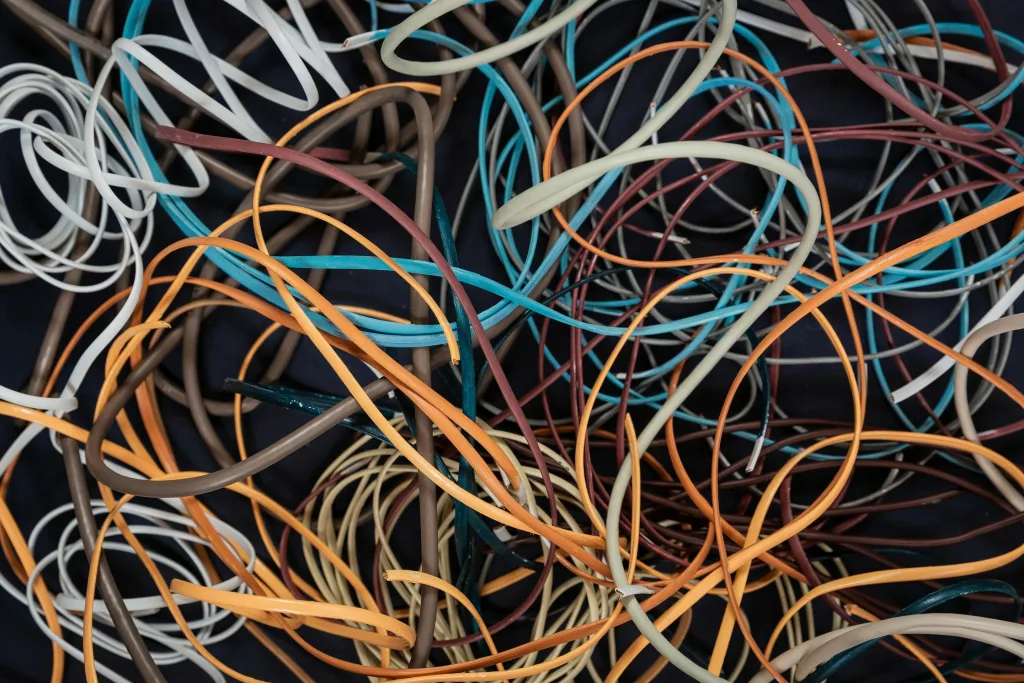
Copper wire theft has become one of the most persistent infrastructure crimes affecting Southern California. While the crime often targets street lighting and transportation systems, it also has serious consequences for traditional copper telephone networks, which many buildings still rely on for critical communication systems.
For property managers and building owners using legacy phone lines, copper theft can lead to sudden outages, long repair delays, and growing uncertainty about the reliability of traditional landline service.
Copper Theft Is a Growing Problem in Los Angeles
Law enforcement and city officials have been tracking a sharp rise in copper theft incidents across Los Angeles in recent years.
According to reporting from the Los Angeles Times, the Los Angeles Police Department arrested 82 people and seized more than 2,000 pounds of stolen copper wire during a major crackdown on metal theft.
Despite these efforts, the problem continues to affect city infrastructure. Data cited by the Los Angeles City Controller shows that reports of copper wire theft increased from roughly 7,200 incidents in fiscal year 2022–2023 to nearly 16,000 by 2024–2025.
Many of these crimes involve utility infrastructure that is easy to access, such as underground vaults, light poles, and telecommunications conduits.
Telecommunications Networks Are Frequently Impacted
Copper cable theft does not only affect lighting or transportation systems. Telecommunications providers regularly report outages when thieves cut into phone and internet infrastructure looking for valuable metal.
A report involving AT&T infrastructure found that Los Angeles alone recorded about 1,502 copper theft incidents in just the first six months of one year, illustrating how widespread the problem has become in the region.
In some cases, entire neighborhoods lose service when cables are removed. The Los Angeles Times has reported that copper theft in South Los Angeles left residents without functioning landline service, raising concerns among elderly residents who depend on those phones for emergency calls.
Repairing the damage is often far more complicated than simply replacing the stolen copper. Telecommunications cables typically contain bundles of hundreds of individual lines, meaning a single theft can disrupt service for large areas.
Thieves Often Cause Larger Network Outages
Ironically, many outages occur even when thieves fail to steal copper.
In one case reported by the Los Angeles Times, would-be copper thieves accidentally cut through fiber-optic lines while searching for copper, causing a major internet outage affecting portions of Los Angeles and Ventura counties.
Telecommunications companies say these incidents can take hours or even days to repair depending on the complexity of the network.
Infrastructure Repairs Can Take Months
One of the biggest challenges with copper theft is the time required to restore service.
City officials and utility providers have noted that damage caused by copper theft can leave infrastructure out of service for months, particularly when underground wiring must be replaced.
When telecommunications infrastructure is involved, the repair process may include:
- Locating and excavating damaged cable routes
- Replacing entire cable bundles
- Testing and reconnecting individual service lines
- Coordinating with multiple utility providers
For buildings relying on copper landlines, this means outages that can last far longer than most people expect.
Why Copper Infrastructure Is So Vulnerable
Copper has long been used in telecommunications because of its excellent conductivity and durability. However, these same properties make it valuable as scrap metal.
The rising price of copper has increased the incentive for theft, while aging infrastructure across cities like Los Angeles has created thousands of potential access points.
Because much of the legacy telephone network was installed decades ago, it was never designed with modern security threats in mind.
What This Means for Building Owners
For property managers and building owners, copper theft highlights an uncomfortable reality: traditional copper phone service is becoming increasingly unreliable in many areas.
When copper lines are stolen or damaged, service restoration can take weeks or months depending on the extent of the damage and the availability of replacement infrastructure.
This is especially concerning for systems that require continuous phone connectivity, including:
- Elevator emergency phones
- Area of refuge systems
- Emergency call boxes
- Intercom systems tied to PSTN lines
If these systems depend on copper landlines, they can be taken offline without warning.
Why Many Buildings Are Transitioning to Cellular
Because copper theft and aging infrastructure continue to disrupt landline networks, many property owners are choosing to move critical communication systems to cellular-based connectivity.
Cellular solutions eliminate the physical copper wiring that thieves target and can often be installed using existing emergency phone equipment.
At Destra Business Services, we frequently assist property managers throughout Southern California with copper-to-cellular conversions using Mobile Connect 2.
These systems:
- Work with most existing elevator phone hardware
- Eliminate dependency on vulnerable copper lines
- Provide reliable cellular connectivity
- Start at $44 per month for emergency elevator phone service
For many buildings, converting to cellular is not just a modernization upgrade; it is a practical way to protect critical safety systems from infrastructure failures caused by copper theft.
The Bottom Line
Copper wire theft is no longer an isolated nuisance. In cities like Los Angeles, it has become a widespread infrastructure crime that can disrupt lighting, transportation, internet service, and traditional phone networks.
As these incidents continue to affect aging copper systems, more building owners are choosing technologies that do not rely on physical copper lines at all.
For emergency communication systems, that shift toward cellular connectivity is already well underway.
Serving SoCal | Los Angeles | Irvine | Long Beach | Ventura | Riverside | San Diego

