

Private schools, colleges, universities, and other educational campuses often rely on elevator emergency phones that were installed years ago and still depend on traditional copper telephone lines. While the elevator equipment itself may continue to operate reliably, the communication infrastructure supporting it can become increasingly expensive, difficult to maintain, and poorly suited to modern campus operations.
For educational facilities with multiple buildings, dormitories, administrative offices, parking structures, athletic facilities, and classroom buildings, maintaining dependable elevator communication is an important part of both campus safety and facilities management. Destra Business Services helps schools and colleges modernize these systems by converting existing elevator phone equipment from traditional copper service to reliable cellular connectivity.
Aging Copper Lines Create an Increasing Problem for Educational Facilities
For decades, dedicated POTS, or Plain Old Telephone Service, lines were the standard method for connecting elevator emergency phones. These lines provided a familiar and dependable solution, but the telecommunications industry has steadily moved away from maintaining legacy copper infrastructure.
For schools and colleges, this transition can create a number of challenges. Monthly line charges may continue to increase, service interruptions can become more difficult to troubleshoot, and facilities departments may find themselves paying substantial recurring costs simply to maintain basic emergency communication service.
A campus with several elevators can quickly accumulate thousands of dollars in annual telephone expenses. When those lines serve only a single emergency device, it makes sense to evaluate whether a more modern and cost-effective communication method is available.
Cellular Elevator Phone Service Provides a Practical Upgrade Path
Destra Business Services provides cellular elevator phone service designed to replace traditional copper telephone connectivity while allowing many facilities to continue using their existing elevator phone equipment.

Our Mobile Connect 2 solution acts as the communication bridge between the elevator phone and the cellular network. Instead of relying on an aging outside copper line, the existing emergency phone connects through a cellular gateway that provides the dial tone and connectivity necessary for the phone to place emergency calls.
This approach can be especially valuable for schools and colleges because it avoids unnecessary replacement of equipment that may still be functioning properly. In many installations, there is no need to replace the elevator phone, run new telephone cabling throughout the building, or undertake a major modernization project simply to update the communication service.
A Better Fit for Multi-Building Campuses
Educational campuses frequently present communication challenges that are different from those found in a single commercial building. A private school may have separate classroom buildings, athletic facilities, performing arts centers, administrative offices, and parking structures. Colleges may add residence halls, libraries, student centers, laboratories, and additional satellite buildings.
Each elevator may have its own emergency communication requirement, and each traditional telephone line may generate a separate monthly charge. Moving appropriate elevator phone connections to cellular service can help simplify this infrastructure while providing facilities managers with a more consistent approach across multiple buildings.
This can also make future campus expansion easier. When a new building or elevator is added, facilities departments are no longer necessarily dependent on the availability of legacy copper telephone service at that location.
Reduce Recurring Telephone Costs
Budget management is an ongoing concern for private schools and colleges. While telecommunications expenses may seem relatively small when viewed individually, multiple dedicated elevator lines can add significant annual operating costs.
Copper telephone lines have become particularly expensive in many areas because carriers are investing less in legacy infrastructure while encouraging customers to transition toward newer technologies. Educational institutions may therefore find themselves paying more each year for a service that is becoming increasingly outdated.
Cellular elevator phone service can provide a more predictable monthly communication cost and may significantly reduce expenses compared with maintaining dedicated traditional telephone lines.
For campuses with multiple elevators, those savings can become substantial.
Maintain Reliable Emergency Communication
The primary purpose of an elevator phone is not convenience. It is to provide passengers with a dependable way to request assistance if an elevator becomes disabled or someone becomes trapped inside the car.
When a passenger activates the emergency phone, the system must be capable of establishing communication with an appropriate monitoring or response location. That communication link therefore needs to remain dependable even as traditional telephone infrastructure continues to change.
A properly installed cellular gateway allows an existing elevator phone to communicate over the cellular network while preserving the basic operation occupants expect from the emergency phone.
Destra Business Services evaluates the existing elevator communication equipment, available cellular signal, power requirements, and building conditions before recommending an installation. The goal is to provide a dependable conversion while making use of existing infrastructure whenever practical.
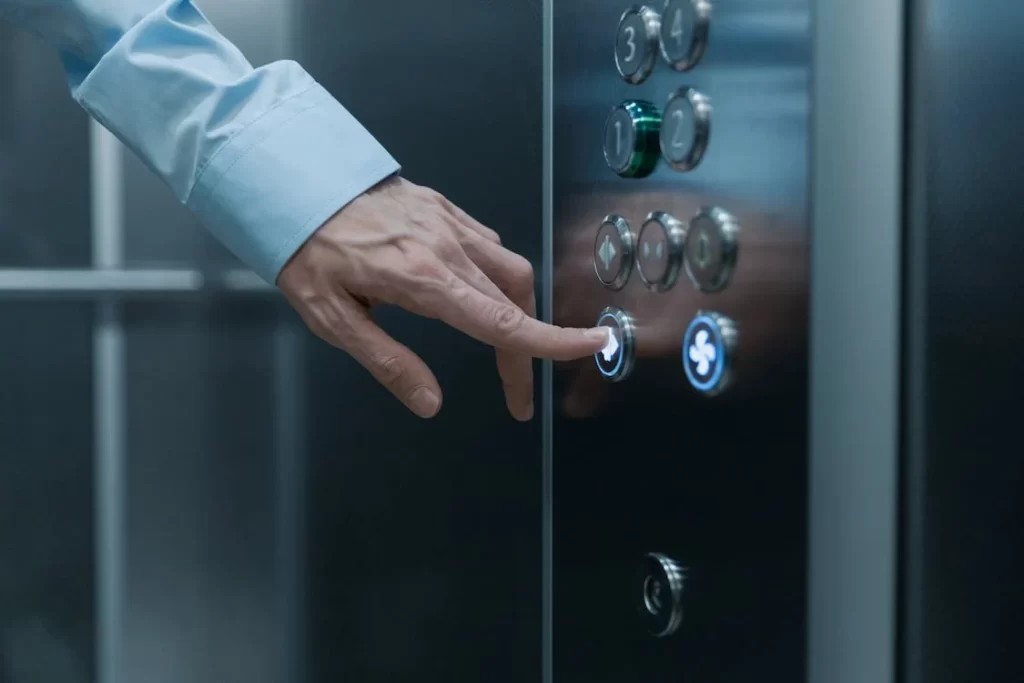
Reliable Elevator Phone Service & Installation
You can save up to 60% on your elevator phone line by switching to our Mobile Connect 2 service.
Why upgrade your elevator phone line to cellular?
Emergency Communication Beyond the Elevator
Educational facilities often contain other emergency communication systems that may also rely on traditional telephone service.
These can include area-of-refuge communication systems, parking structure phones, emergency call boxes, building entry systems, intercoms, pool phones, and other analog communication devices.
Because Mobile Connect 2 is designed to provide cellular connectivity for compatible analog telephone equipment, a campus-wide review may identify additional opportunities to eliminate aging copper lines while simplifying communication infrastructure.
For facilities managers overseeing multiple buildings, consolidating these systems around modern cellular connectivity can reduce the number of legacy services that must be maintained.
Minimize Disruption to Campus Operations
Schools and colleges operate on demanding schedules. Major construction or telecommunications projects can interfere with classes, student activities, administrative operations, and campus events.
One of the advantages of a copper-to-cellular elevator phone conversion is that it can often be completed without extensive changes to the building.
Because the existing elevator phone and much of the existing wiring can frequently remain in place, installation is generally more straightforward than a complete communication system replacement. This makes cellular conversion particularly attractive for campuses that want to modernize infrastructure without creating unnecessary disruption.
Planning Ahead Is Better Than Waiting for a Phone Line Failure
Facilities departments should not wait until an elevator phone line becomes unreliable or a telephone carrier announces a service change before considering an upgrade.
A planned transition provides time to inspect the existing equipment, verify cellular coverage, coordinate installation schedules, and make sure each affected communication system is properly tested.
For private schools and colleges, summer breaks, holiday periods, and other scheduled campus closures may provide ideal opportunities to complete these upgrades with minimal disruption.
Taking a proactive approach also reduces the risk of needing an emergency telecommunications solution after a legacy telephone line unexpectedly fails.
Upgrade Your School or College Elevator Phone Service with Destra Business Services
Destra Business Services specializes in converting legacy elevator and emergency communication systems from traditional copper telephone service to modern cellular connectivity.
Our Mobile Connect 2 service allows many schools and colleges to retain their existing elevator emergency phones while replacing expensive and aging POTS lines with reliable cellular service. We can evaluate individual elevators or help facilities managers develop a broader conversion plan for multiple buildings across a campus.
If your school, college, university, or educational facility is still paying for traditional elevator telephone lines, now is a good time to review your options.
Us the for below to contact Destra Business Services and learn how Mobile Connect 2 can help modernize your campus emergency communications, reduce recurring telephone costs, and prepare your facilities for the continued transition away from legacy copper infrastructure.

