
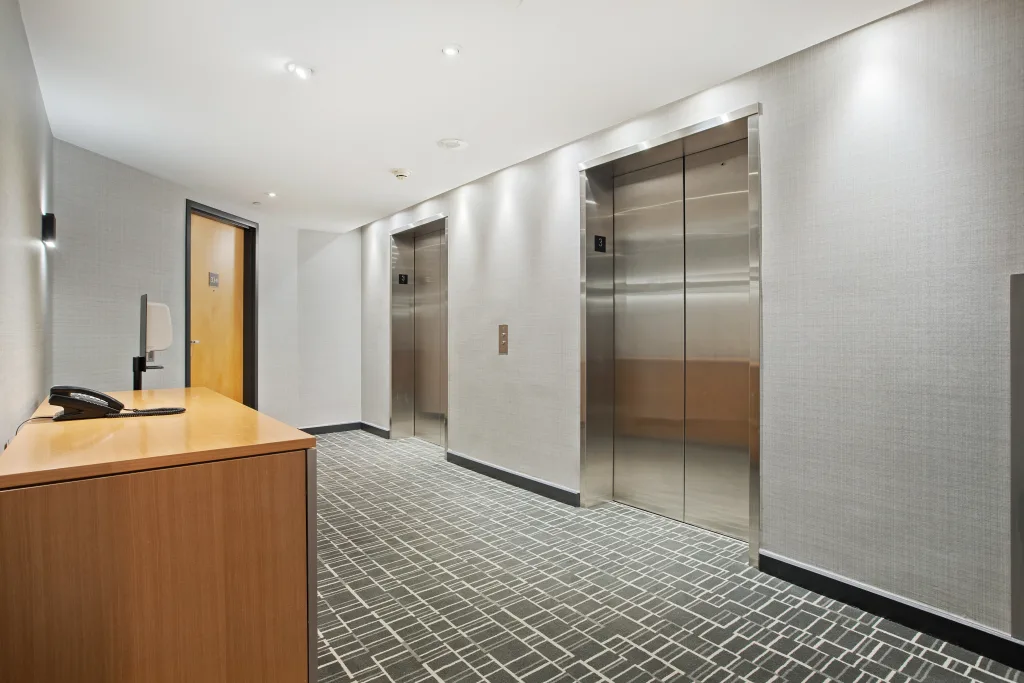
Converting an elevator phone from a traditional landline to cellular service does not necessarily require replacing the phone inside the elevator.
In many buildings, Destra Business Services can connect the existing emergency telephone equipment to Mobile Connect 2, allowing calls to travel over a cellular network while preserving the elevator’s existing analog communication system.
This type of cellular elevator phone conversion provides a practical way to eliminate expensive copper telephone lines while maintaining the equipment already installed in the building.
What Is a Cellular Elevator Phone Conversion?
A cellular elevator phone conversion replaces the traditional telephone network connection used by the elevator with a cellular communication path.
The elevator phone itself may remain unchanged.
Mobile Connect 2 is installed between the existing elevator communication equipment and the cellular network. It provides the telephone interface required by compatible analog equipment and transports emergency calls over cellular service.
The basic communication path changes from:
Elevator Phone → Copper Telephone Line → Telephone Network
to:
Elevator Phone → Mobile Connect 2 → Cellular Network
From the perspective of compatible elevator equipment, the change can be relatively transparent. The phone still receives dial tone and still places a telephone call when activated. The difference is how that call reaches the outside network.
Step 1: Evaluate the Existing Elevator Phone
The first step in a conversion is determining what equipment is already installed.
DBS identifies the elevator telephone, how it is connected, and where the telephone line enters the communication system.
In many existing buildings, the elevator phone connects to analog wiring that ultimately terminates somewhere in the building’s telephone room.
Older properties may use punch-down blocks, terminal strips, legacy cabling, or other communications infrastructure that has been in place for decades.
That infrastructure is not automatically obsolete.
If the wiring and elevator telephone remain functional, they may continue to be used after the conversion.
Step 2: Identify the Existing Telephone Line
Next, DBS identifies the traditional telephone circuit currently serving the elevator.
This is important because commercial buildings frequently contain numerous analog lines serving different systems.
An elevator line can easily be confused with:
• Gate telephone lines
• Fire or security equipment
• Pool emergency phones
• Intercom systems
• Fax lines
• Alarm equipment
• Other building communications
Properly identifying the elevator communication circuit helps ensure the cellular conversion is performed without disrupting unrelated systems.
Step 3: Install Mobile Connect 2
Once the communication path has been identified, Mobile Connect 2 is installed as the replacement for the traditional telephone service.
The device provides an interface between the existing analog elevator equipment and the cellular network.
Instead of receiving telephone service from the carrier’s copper network, the elevator receives its communication path through Mobile Connect 2.
This allows compatible legacy equipment to continue operating without maintaining the original landline.
Step 4: Provide Dial Tone to the Existing Equipment
Dial tone is an important part of many traditional analog telephone systems.
Older elevator phones were designed with the expectation that they would be connected to conventional telephone service. They may use the presence of dial tone and traditional telephone signaling as part of normal operation.
Mobile Connect 2 recreates the telephone interface expected by compatible equipment.
This is one of the reasons a purpose-built POTS replacement solution can be useful when modernizing older elevator systems.
The elevator does not have to become an internet-connected device.
Instead, the cellular gateway allows the existing analog equipment to continue communicating in a familiar way.
Step 5: Route Calls Over Cellular
When the elevator emergency telephone is activated, Mobile Connect 2 carries the call over the cellular network.
This eliminates dependence on the telephone company’s copper infrastructure.
It can also avoid dependence on the building’s internet connection, office telephone server, or normal VoIP system.
For emergency communication equipment, minimizing unnecessary dependencies can make the installation simpler and easier to manage.
Step 6: Test the Complete Communication Path
Installation is only part of a successful conversion.
The completed system must be tested.
DBS verifies that the elevator telephone can initiate a call through Mobile Connect 2 and that the communication path operates as intended.
This allows potential issues to be discovered during the installation rather than during an elevator inspection or emergency.
Why Convert Instead of Replacing Everything?
A full replacement of elevator telephone equipment can involve additional hardware, wiring, labor, coordination, and expense.
But if the existing telephone works correctly, replacement may provide little practical benefit.
A cellular conversion focuses on the part of the system that has actually become obsolete: the telephone network connection.
This approach can help property owners preserve previous investments while adapting the building to changes in telecommunications infrastructure.
Ideal Applications for Cellular Elevator Conversion
Cellular elevator conversion can be particularly useful in properties with older but functional elevator communication equipment.
Common applications include:
• Apartment and condominium buildings
• Commercial office buildings
• Parking structures
• Hotels
• Senior living communities
• Hospitals and medical facilities
• Schools
• Government buildings
• Industrial properties
• Mixed-use developments
It can also be especially valuable for properties maintaining several elevator telephone lines.
What About Power Failure?
Emergency communications equipment must be planned with outages in mind.
Traditional copper telephone service historically had characteristics that made it attractive for emergency communications, including network-side power in many installations.
Modern replacement systems therefore require appropriate consideration for backup power and continued operation during building power interruptions.
DBS evaluates the communications installation as a complete system rather than treating cellular service as simply another consumer telephone line.
What About Elevator Codes and Inspections?
Changing the communication path does not eliminate the property’s responsibility to maintain compliant elevator emergency communication.
The equipment still needs to perform the required communication function and should be tested as part of the property’s normal elevator maintenance and inspection process.
DBS works with property managers, building owners, elevator contractors, and other stakeholders to provide a dependable cellular communications path for compatible elevator systems.
Cellular Conversion Can Reduce Monthly Costs
Traditional commercial telephone lines have become increasingly expensive.
For buildings with several elevators, recurring telecommunications charges can become a significant operating expense.
Mobile Connect 2 service is available for $44 per month per line, making cellular conversion attractive not only as a modernization project but also as a cost-control strategy.
Instead of continuing to pay increasing rates for aging telephone infrastructure, property owners can transition the elevator communication system to modern cellular connectivity.
Experienced With Legacy Building Communications
Cellular conversion is not just about installing a radio.
The real work is often understanding the existing building.
DBS has extensive experience working with legacy analog telephone equipment, older wiring, telephone rooms, elevator communication systems, intercoms, emergency phones, and other building infrastructure.
That experience is particularly important in older properties where documentation may be limited and communications wiring may have been modified repeatedly over the years.
Our goal is to identify what is already working, preserve it wherever practical, and modernize the part of the system that needs to change.
Convert Your Elevator From Landline to Cellular
If your building still relies on a copper telephone line for elevator emergency communication, now is a good time to evaluate your options.
• You may not need a new elevator phone.
• You may not need new cabling.
• You may simply need to replace the old telephone connection.
Destra Business Services uses Mobile Connect 2 to convert compatible existing elevator communication systems from traditional landlines to modern cellular service.